Baby Pacifiers & Soothers – Safe Silicone Pacifiers Online Pakistan
The pacifier debate in Pakistan is generational. Grandmothers say “chusni lagao, chup ho jayega.” Pediatricians say “check the material and shape first.” Social media says “pacifiers cause dental problems.” The truth sits in the middle — and it depends entirely on the type of pacifier you use, how long you use it, and when you wean. At BuyNBazaar.pk, we stock orthodontic-grade silicone pacifiers designed to support natural oral development, not hinder it. Every pacifier is one-piece construction (no small parts to detach), BPA-free, and available in age-appropriate sizes.
Are Pacifiers Safe for Newborn Babies?
Yes — when used correctly. The American Academy of Pediatrics (AAP) recommends pacifiers during sleep because they reduce the risk of Sudden Infant Death Syndrome (SIDS) by up to 90%. The mechanism is not fully understood, but the prevailing theory is that the sucking reflex keeps the airway more active. Pakistani pediatricians at Shaukat Khanum, Children’s Hospital Lahore, and Aga Khan University Hospital Karachi follow the same guideline. The key safety rules: introduce after breastfeeding is established (usually 3–4 weeks), never dip in honey or sugar (aspiration and infection risk), never tie around the neck (strangulation risk), and replace every 4–6 weeks or at first sign of wear.
What Is an Orthodontic Pacifier and Why Does It Matter?
A standard round-nipple pacifier pushes against the palate uniformly, which over extended use can cause the upper jaw to narrow and front teeth to protrude (what dentists call “open bite”). An orthodontic pacifier has a flattened, asymmetrical nipple that conforms to the natural shape of the baby’s palate. It distributes sucking pressure evenly and promotes proper jaw alignment. All major pediatric dental associations recommend orthodontic pacifiers over round ones if a pacifier is going to be used. At BuyNBazaar, every pacifier we sell is orthodontic-grade — we do not stock round-nipple models because the evidence against them is clear.
Silicone vs. Latex Pacifiers — Which Is Better?
Latex pacifiers are softer and more flexible, which some babies prefer. But latex degrades faster, becomes sticky with use, and can trigger allergic reactions in latex-sensitive babies. Silicone pacifiers are firmer, maintain their shape longer, do not develop odor, and are hypoallergenic. They withstand higher sterilization temperatures without degrading. For Pakistan’s climate — where heat accelerates material breakdown — silicone is the superior choice. All our pacifiers are medical-grade silicone.
When Should You Wean a Baby Off the Pacifier?
The AAP recommends weaning between 6 and 12 months. Most pediatric dentists say pacifier use beyond 24 months increases the risk of dental malocclusion. The Pakistani cultural norm of extended pacifier use (sometimes until age 3–4) is associated with higher rates of open bite and speech delays. Our recommendation: start reducing pacifier use at 6 months by limiting it to sleep time only. By 12 months, phase it out completely. Cold-turkey works for some babies; gradual reduction (cutting the tip slightly so it loses suction) works for others.
How to Clean and Sterilize Pacifiers
Sterilize new pacifiers before first use: boil for 5 minutes or use a steam sterilizer. After that, wash with hot soapy water after every use. Boil or steam sterilize once daily for the first 6 months. After 6 months, hot soapy water between uses is sufficient — the baby’s immune system is mature enough. Never “clean” a pacifier by putting it in your own mouth — adult saliva transfers bacteria that cause dental caries. If a pacifier falls on the floor at a public place, store it in a clean container and sterilize at home before reuse.
How Many Pacifiers Do You Need?
Minimum four — two in active rotation, two as backups. Pacifiers get lost constantly (under the sofa, in the car seat, in the stroller gap). Having identical backups prevents a midnight crisis. Buy the same brand and model so the baby does not reject a replacement that feels different. Keep one in the diaper bag permanently.
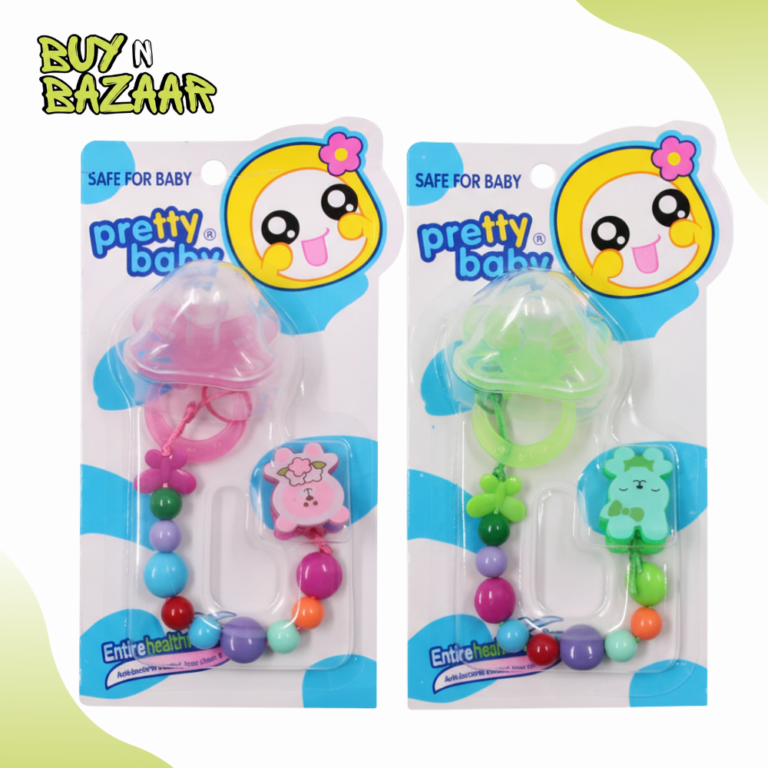
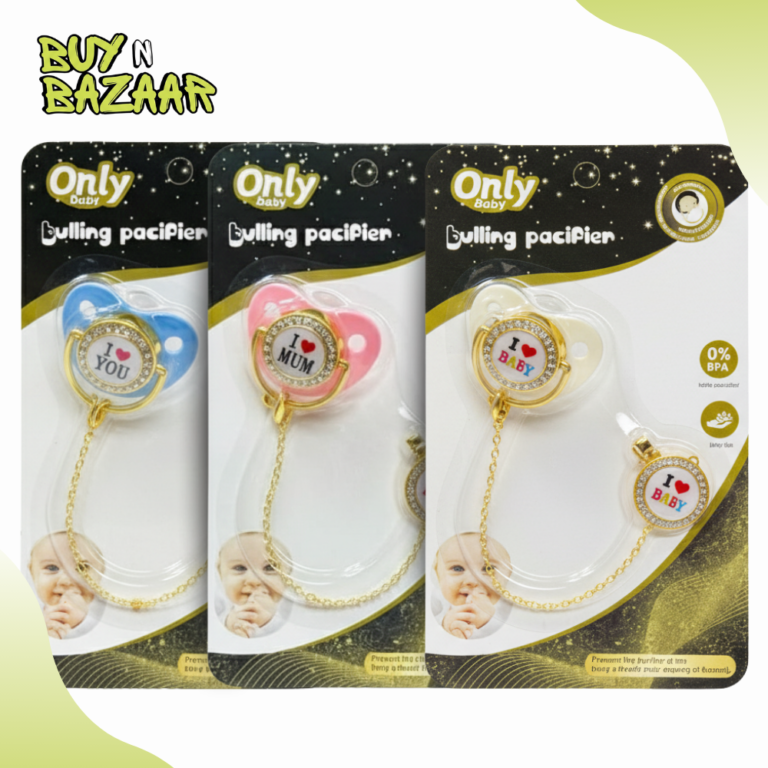
A pacifier directly shapes your baby’s palate, jaw alignment, and dental pattern. The wrong shape used past 18 months causes malocclusion requiring orthodontic correction. BuyNBazaar stocks orthodontic and hospital-grade pacifiers recommended by Pakistani pediatricians. All BPA-free, age-sized, and one-piece with no detachable small parts.Orthodontic vs Regular PacifiersFeatureOrthodonticRegular Round-NippleNipple shapeFlattened, asymmetricSymmetrical, roundPalate impactSupports natural archCan flatten palateAge limitUp to 2-3 years safelyStop by 18 monthsExamplesNUK Genius, MAM OriginalGeneric market pacifiersSilicone vs Latex Pacifiers for Pakistani BabiesSilicone pacifiers are firm, odorless, tasteless, and boiling-safe up to 200 degrees. They last longer in Pakistan’s heat. Latex is softer but degrades faster in hot climates – inspect weekly for cracks. Silicone is the better choice for Pakistan’s high storage temperatures.Pacifier Chains and ClipsPacifier chains keep the soother attached to clothing so it does not fall on the floor. Safety rule: chain must be under 22cm total length. Never attach to a cot, pram, or fixed point. Clip to clothing only. Our pacifier chains comply with EU safety standard EN 13217 with breakaway clasps.When should I introduce a pacifier to my newborn?If breastfeeding, wait 3-4 weeks for breastfeeding to establish first. For formula-fed babies, introduce from day one. Always offer after feeding – never as a substitute for a feed. Research published in Pediatrics shows pacifier use at sleep time reduces SIDS risk by up to 90 percent.What pacifier size should I buy in Pakistan?0-6 months: small shield, short nipple. 6-18 months: medium shield, longer nipple. 18+ months: large shield, longest nipple. The shield must be too large to fit inside the baby’s mouth – this prevents choking. Never use a 0-6 month pacifier on a 12-month-old.How often should I replace baby pacifiers?Replace silicone pacifiers every 4-6 weeks. In Pakistan’s summer heat (45+ degrees in Punjab), inspect every 3 weeks. Replace immediately if you see tearing, color change, swelling, or stickiness. Pull the nipple before each use – if it does not snap back, discard it.Shop all baby products. See our baby feeders and feeding accessories. As teething begins at 4-7 months, add our baby teethers for gum relief alongside pacifier use.