
Filter by price
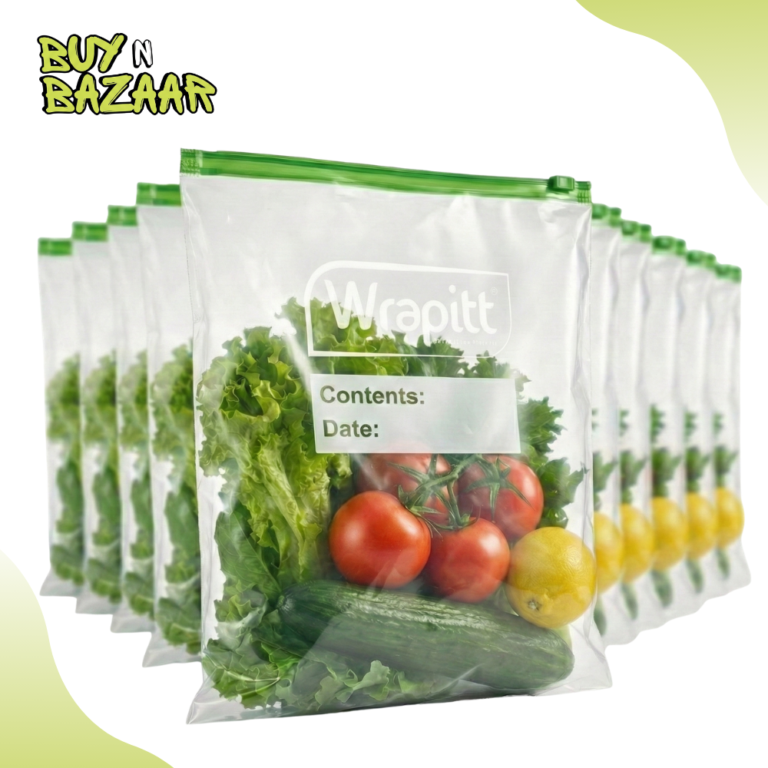
Storage Solutions — Airtight Containers, Kitchen Jars & Food Storage Online Pakistan
Open the average Pakistani kitchen cabinet and you will find a collection of repurposed ice cream tubs, old Shan masala jars, plastic bags tied with rubber bands, and steel containers with mismatched lids. It works — sort of — until the flour gets weevils, the rice absorbs curry smell from the adjacent container, the spices lose their kick, and the sugar hardens into a brick. Proper food storage is not about aesthetics. It is about preventing waste, preserving nutrition, and keeping your kitchen functional. At BuyNBazaar.pk, we stock airtight containers, stackable jars, pantry organizer sets, and specialized storage for Pakistani kitchen staples — from atta to zeera.
Why Airtight Containers Matter More in Pakistan
Pakistan's climate is uniquely hostile to food storage. Humidity in Karachi reaches 80–90% from July to September — moisture seeps into any container that is not sealed, causing clumping in sugar and salt, mold growth in dried fruits, and staleness in biscuits and rusks. Lahore's summer heat (42–48°C) accelerates oxidation of cooking oils and spices. And everywhere in Pakistan, pantry pests — weevils in flour, moths in rice, ants in sugar — are a constant battle. Airtight containers with silicone-sealed lids create a barrier against all three threats: moisture, air, and pests. The silicone gasket compresses when the lid locks, creating a vacuum-like seal that standard snap-on lids cannot match.
Glass vs. Plastic vs. Steel Storage Containers
Glass containers (borosilicate) are the gold standard: zero odor absorption, zero staining, microwave-safe, oven-safe up to 300°C, and they never warp. The downside is weight and breakage risk — in a busy Pakistani kitchen with multiple cooks, glass gets dropped. BPA-free PP plastic containers are lightweight, shatterproof, and affordable. Quality PP does not absorb stains or odors from turmeric, curry, or nihari (the bane of cheaper plastic containers). Look for containers marked "stain-resistant" or "odor-resistant." Steel containers with airtight lids are traditional in Pakistani kitchens (the classic dabba) — they are indestructible, light-blocking (which preserves spice color and potency), and pest-proof. They are not microwave-safe and cannot be used for acidic foods (tomato-based gravies react with steel over time). Our recommendation: glass for leftovers and reheating, PP plastic for pantry staples (atta, rice, dal, sugar), steel for spices and dry goods.
How to Store Pakistani Kitchen Staples Correctly
Atta (flour): transfer from the cloth bag immediately to a large airtight container. Flour absorbs moisture and attracts weevils within days of opening. A bay leaf placed inside the container repels weevils naturally. Chawal (rice): airtight container, cool dry place. Rice stored in a sealed container at room temperature lasts 6–12 months. Masala (spices): steel or dark glass containers — light degrades spice color and potency. Ground spices lose 50% of their volatile oils within 6 months if stored in open containers or clear glass. Cheeni (sugar): airtight container with a moisture absorber (silica gel sachet). Pakistan's humidity hardens sugar into solid blocks — a sealed container prevents this entirely. Doodh (milk) and dahi (yogurt): glass containers in the fridge at 4°C. Plastic absorbs dairy odors permanently. Cooking oil: dark bottle or steel container, away from the stove. Heat and light accelerate rancidity — oil stored next to the stove (the most common placement in Pakistani kitchens) goes rancid 3x faster than oil stored in a cool cabinet.
How to Organize a Pakistani Pantry with Limited Space
Uniform containers are the secret to an organized pantry. When containers are the same size and shape, they stack efficiently and use vertical space that mismatched containers waste. Label every container — not just the name, but the date of filling. Use turntable organizers (lazy Susans) for spices — spin to find what you need instead of moving 15 containers to reach the one at the back. Install shelf risers to create a second tier inside deep shelves. Use door-mounted racks for small items: tea bags, soup packets, instant noodle packs, and small spice jars.
What Size Containers Do You Need?
Pakistani kitchen storage follows a predictable pattern. Extra large (10–15 liters): atta (a 10 kg bag needs at least 12L), rice (5–10 kg bags). Large (3–5 liters): sugar, dal varieties, maida, sooji. Medium (1–2 liters): tea, dried fruits, biscuits, cereal, oats. Small (250–500 ml): individual spices (haldi, mirch, zeera, dhania, garam masala, etc.). At BuyNBazaar.pk, we sell containers individually and in graduated sets that cover the full size range — sized specifically for Pakistani kitchen staples, not Western pantry items.