Filter by price
Baby Feeders - BPA-Free Feeding Bottles Online in Pakistan
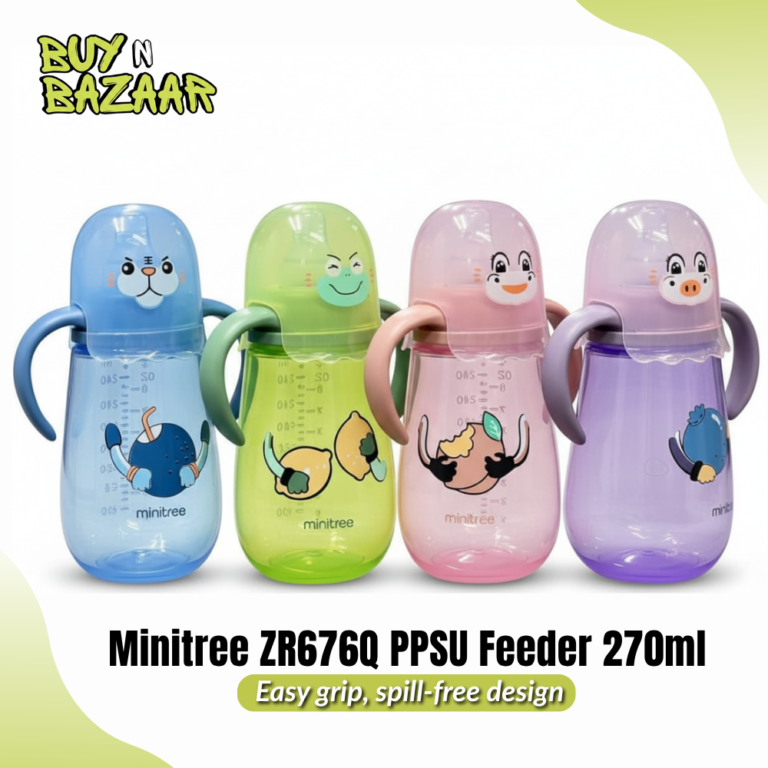
Finding the right feeder for your newborn is one of the first real decisions Pakistani parents face — and one of the most confusing. Walk into any baby store in Lahore's Anarkali or Karachi's Tariq Road and you will see shelves packed with feeders from fifty different brands, each claiming to be "the best." The problem is not choice. The problem is trust. You need a feeder that is genuinely BPA-free, made from food-grade material, and designed with an anti-colic valve that actually works — not just a sticker on the box.
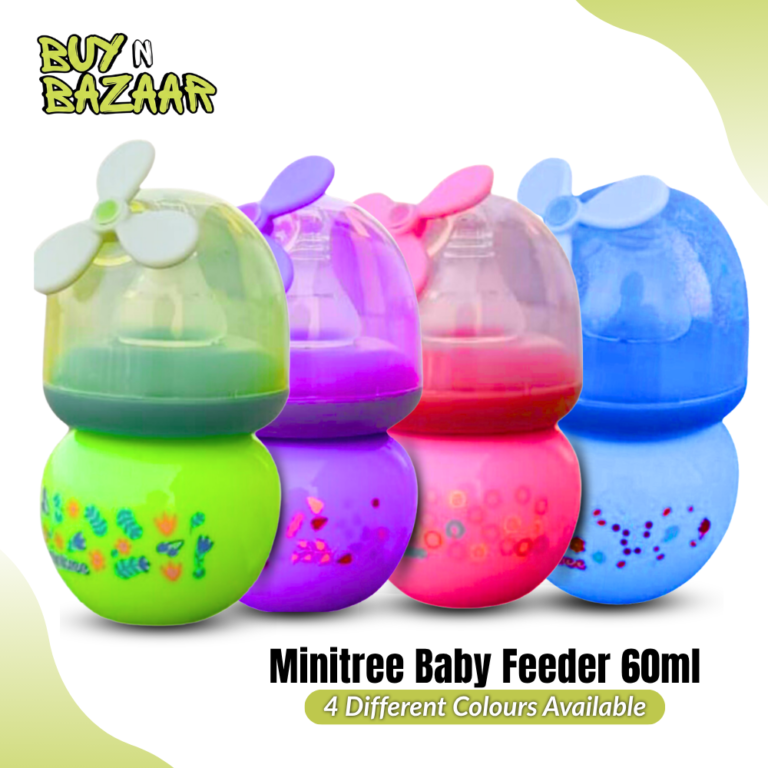
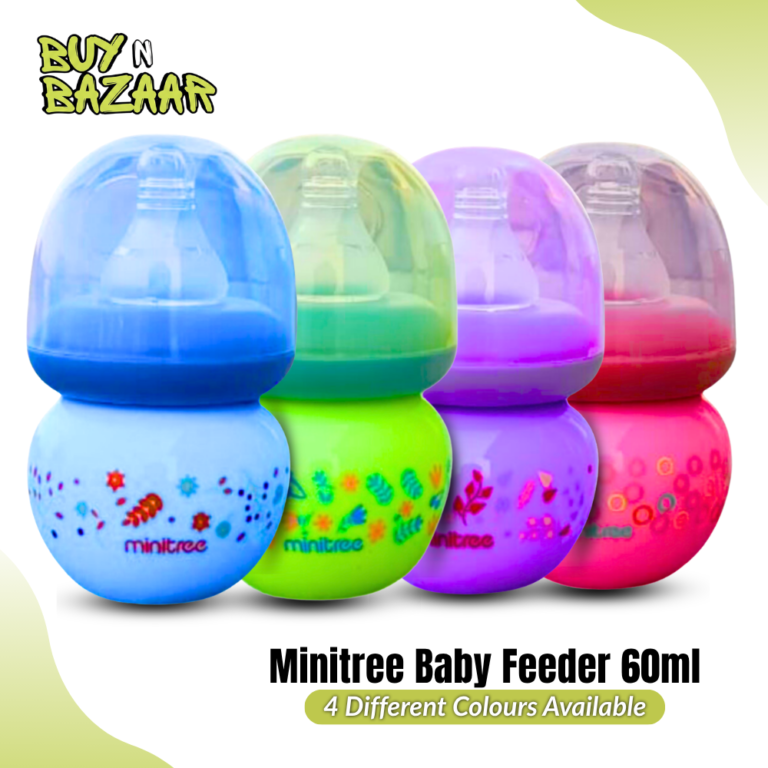
At BuyNBazaar.pk, every baby feeder we stock has been checked for BPA-free certification, food-grade silicone or PP plastic construction, and functional anti-colic venting. We ship from Ichhra, Lahore with cash on delivery available nationwide, Karachi, Islamabad, Peshawar, Multan, Faisalabad, and everywhere in between.
Which Baby Feeder Is Best for Newborns in Pakistan?
A newborn stomach holds roughly 5–7 ml on day one and about 60 ml by the end of the first week. That means your first feeder should be 60 ml to 125 ml (2 oz to 4 oz), anything larger and you risk overfeeding. Pair it with a slow-flow nipple (size 0 or SS) that mimics breastfeeding rhythm. The baby should work to extract milk, not have it pour into their mouth. Brands like Philips Avent Natural, Pigeon Peristaltic Plus, and Dr. Brown's Options+ all offer slow-flow systems designed for day-one use. In Pakistan, Shield and Farlin are popular local-availability options with anti-colic valves at half the imported price.
What Is the Difference Between Anti-Colic and Regular Baby Feeders?
Regular feeders have a simple nipple-and-bottle design. As the baby sucks, a vacuum builds inside the bottle. This vacuum forces the baby to break the latch repeatedly, swallowing air with each gulp. That swallowed air causes gas, bloating, spit-up, and the crying episodes Pakistani mothers call "gola hona." Anti-colic feeders solve this with a venting system, a small valve (either in the nipple or inside the bottle) that lets air into the bottle without passing through the milk. Dr. Brown's uses an internal vent system. Philips Avent uses an AirFree vent in the nipple. Both work. The result: less gas, less crying, and better sleep for parent and baby.
How to Tell If a Baby Feeder Is Genuinely BPA-Free
BPA (Bisphenol A) is an industrial chemical used in polycarbonate plastic. When heated, and Pakistani mothers routinely sterilize feeders in boiling water, BPA leaches into milk. Studies link BPA exposure to hormonal disruption in infants. Genuine BPA-free feeders are made from polypropylene (PP), tritan, borosilicate glass, or food-grade silicone. Check the bottom of the bottle: look for the recycling number. PP plastic is marked with a 5 inside a triangle. Polycarbonate (the BPA-containing type) is marked with a 7. If there is no marking at all, do not buy it. At BuyNBazaar, every feeder page lists the exact material and BPA-free certification status.
Glass vs. Silicone vs. Plastic Baby Feeders - Which Is Safest?
Glass feeders (borosilicate) are the safest from a chemical standpoint — zero leaching at any temperature. But they break. In a joint family household in Pakistan where multiple people handle the baby, breakage is a real concern. Silicone feeders combine the chemical safety of glass with the durability of plastic. Medical-grade silicone is non-porous, naturally antibacterial, and withstands boiling, microwave sterilization, and UV sterilizers without degrading. The downside is cost — a single silicone feeder costs Rs. 800–1,500 compared to Rs. 250–500 for plastic. PP plastic feeders are lightweight, shatterproof, and affordable. As long as they are genuinely BPA-free PP (not polycarbonate), they are safe for daily use. Our recommendation: start with silicone or glass for the newborn phase (0–3 months) when sterilization frequency is highest, then transition to quality PP plastic for the active stage.
How Often Should You Replace Baby Feeders?
Replace plastic feeders every 3–4 months, or immediately if you notice scratches, discoloration, or a milky film that does not wash off — these are signs of material degradation. Silicone feeders last 6–8 months. Glass feeders last indefinitely unless chipped or cracked. Nipples degrade faster than bottles: replace every 4–6 weeks regardless of material. A nipple that has become sticky, torn, or misshapen is a choking hazard.
Best Baby Feeder Brands Available in Pakistan
Philips Avent Natural — the most popular imported brand. Wide-neck design, anti-colic valve, available in PP and glass. Price range: Rs. 1,200–2,500. Pigeon Peristaltic Plus — Japanese engineering, peristaltic nipple that mimics breast movement. Popular with NICU-discharge babies. Price: Rs. 900–1,800. Dr. Brown's Options+ — internal vent system, clinically proven to reduce colic. Price: Rs. 1,500–3,000. Shield — Pakistani brand, affordable, widely available. Anti-colic valve, BPA-free PP. Price: Rs. 350–800. Farlin — Taiwanese brand with strong Pakistan distribution. Known for spoon feeders and wide-neck bottles. Price: Rs. 500–1,200.
How to Sterilize Baby Feeders in Pakistan's Climate
Pakistan's heat and humidity create ideal conditions for bacterial growth. The safest method is boiling: submerge all parts (bottle, nipple, cap, collar) in rolling boiling water for 5 minutes. Do not over-boil — extended heat degrades PP plastic. Steam sterilizers (electric or microwave) are faster and more consistent. For families without reliable electricity — common during load-shedding hours in Punjab and Sindh — Milton cold-water sterilization tablets are an effective alternative. Whichever method you choose, sterilize every feeder before every feed for the first 3 months. After 3 months, once-daily sterilization plus hot soapy water between feeds is sufficient according to WHO guidelines.
What Pakistani Mothers Say About Our Baby Feeders
"Meri beti ne pehle din se Avent Natural accept kar liya. Gas ka masla bilkul khatam." — Ayesha R., Lahore. "Shield feeder use karta hoon, affordable hai aur anti-colic valve kaam karta hai." — Fatima S., Karachi. "BuyNBazaar se order kiya, next day mil gaya Lahore mein. Original packing thi." — Hina M., Lahore.
Why Buy Baby Feeders from BuyNBazaar.pk?
We are a Lahore-based store — our warehouse sits in Tradelink Enterprise, Jinnah Colony, Pir Ghazi Road, Ichhra, between Gulberg and Mozang. Every feeder is sourced from authorized distributors, not grey-market imports. You get original packaging, manufacturer warranty where applicable, cash on delivery nationwide, and same-day dispatch for Lahore orders placed before 2 PM. Free delivery on orders above Rs. 2,999.