Color
Kitchen Wraps — Cling Film, Aluminum Foil & Baking Paper Online Pakistan
Every Pakistani kitchen runs through three consumables faster than any other: cling film for covering bowls and wrapping roti, aluminum foil for lining trays and wrapping grilled items, and baking paper (butter paper) for oven cooking and preventing sticking. These are not glamorous purchases, but they are used daily — and quality matters more than most people realize. A cheap cling film that does not cling wastes food. A thin foil that tears when wrapping punctures and lets air in. A low-grade baking paper that sticks to your cake defeats its purpose. At BuyNBazaar.pk, we stock food-grade kitchen wraps from trusted brands — each one tested for cling strength, heat resistance, and food safety.
What Is the Difference Between Cling Film, Cling Wrap, and Plastic Wrap?
They are the same product under different names. Cling film (British English), cling wrap (Australian English), plastic wrap (American English), and Saran wrap (brand name used generically) all refer to thin PVC or LDPE film that sticks to itself and to smooth surfaces. In Pakistan, "cling film" and "cling wrap" are used interchangeably. The key specification is the material: PVC-based cling film is cheaper but contains plasticizers (including potentially DEHP, a phthalate) that can migrate into fatty foods when heated. LDPE-based cling film is phthalate-free and food-safe, though slightly less clingy. For direct food contact, especially with oily or hot foods, always use LDPE or labeled "food-safe" cling film.
Can You Microwave Cling Film?
Most cling films are microwave-safe when used correctly — but "correctly" has conditions. The cling film should not touch the food (leave a 2 cm gap). Do not use cling film with high-fat foods in the microwave — fats reach temperatures that cause PVC plasticizers to migrate. Vent one corner to allow steam to escape (sealed cling film can burst from steam pressure). For safer microwave covering, use a microwave-safe plate or a silicone lid — both are reusable and eliminate the plasticizer concern entirely.
Aluminum Foil — Standard vs. Heavy Duty
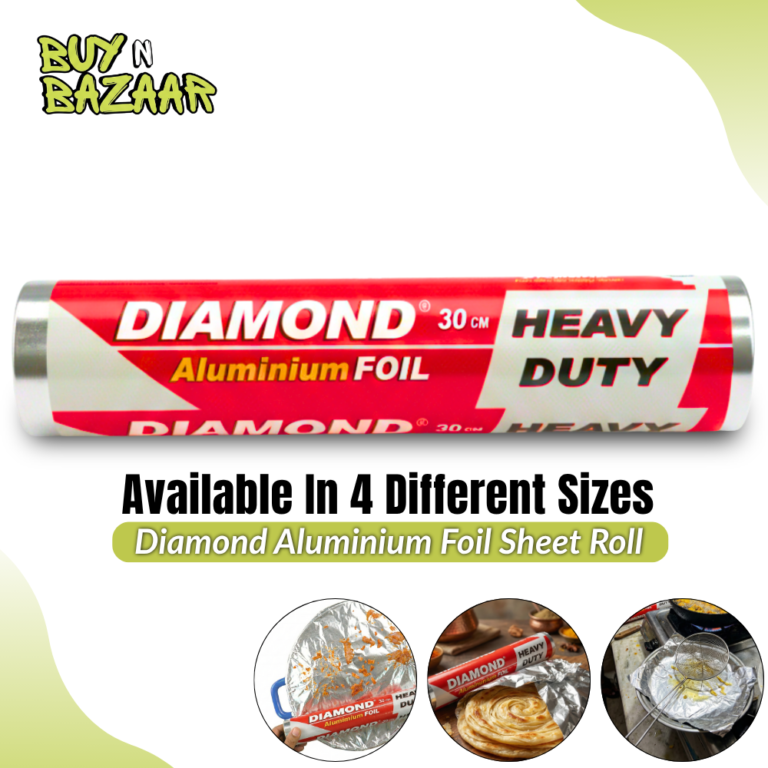
Standard foil (10–12 microns) is fine for covering dishes, lining serving trays, and wrapping sandwiches. Heavy-duty foil (18–25 microns) is necessary for grilling (the heat makes standard foil brittle), wrapping meat for freezing (thicker foil prevents freezer burn), and lining baking trays (standard foil tears when pulling off baked items). For Pakistani BBQ culture — boti, tikka, seekh kebab — heavy-duty foil is essential. Standard foil on a grill disintegrates within minutes.
Baking Paper vs. Butter Paper — Are They the Same?
In Pakistan, "butter paper" is used colloquially, but it is not always the same product. True baking paper (parchment paper) is coated with food-grade silicone on both sides, making it non-stick and heat-resistant up to 220°C. It will not burn in the oven at normal baking temperatures. "Butter paper" sold at many Pakistani stationery shops is often waxed paper — which melts and smokes in the oven and is only suitable for wrapping food at room temperature (like lining a sandwich box). When buying baking paper for oven use, check that it is labeled "parchment" or "silicone-coated" and rated for your oven temperature. At BuyNBazaar, our baking paper is genuine silicone-coated parchment rated to 230°C.
How to Store Kitchen Wraps Properly
Keep cling film and foil in a drawer, not on the counter — sunlight and heat degrade cling film's adhesive properties over time. The cutter bar on the box is your best friend — pull the wrap over the serrated edge and tear downward in one clean motion. If the box loses its cutter bar, replace the whole box or use scissors — tearing by hand creates uneven, crumpled pieces. Store baking paper in a dry location — moisture reduces its non-stick effectiveness.