
Categories
Filter by price
Health & Wellness Products in Pakistan: Clinically-Backed Solutions for Back Pain, Posture, and Hair Care
Pakistan's health challenges are shaped by its climate, work culture, and nutritional gaps. Lower back pain affects an estimated 62% of office workers in major cities (Pakistan Journal of Medical Sciences). Cervical spondylosis is rising among the 2.5 million+ university students who spend 6-8 hours daily hunched over laptops. Hair fall — driven by iron deficiency (affecting 44% of Pakistani women, WHO 2024), vitamin D deficiency from indoor lifestyles, hard water in Punjab, and humidity-related scalp conditions in coastal Sindh — has become the top non-disease health search query in Pakistan.
BuyNBazaar's Health & Wellness category addresses these interconnected problems with products selected for clinical evidence, not marketing claims. Every orthopedic cushion uses certified memory foam with documented density ratings. Every posture corrector is based on physiotherapy principles. Every hair care product contains active ingredients with dermatological research behind them.
Orthopedic Comfort: Memory Foam Cushions, Coccyx Pillows, and Cervical Supports
The orthopedic cushion market in Pakistan is dominated by two problems. First, most products sold as 'memory foam' on local marketplaces are actually regular polyurethane foam — they flatten within weeks, provide no pressure redistribution, and offer zero spinal support. Second, most listings provide no foam density rating, no ergonomic certification, and no information about the design's clinical basis.
At BuyNBazaar, we list the foam density (measured in kg/m³) for every orthopedic product. Clinical-grade memory foam starts at 45 kg/m³ — anything below 40 kg/m³ will compress under body weight and lose its therapeutic benefit within 3 months. Our cushions range from 45-60 kg/m³, providing lasting support through Pakistan's work year.
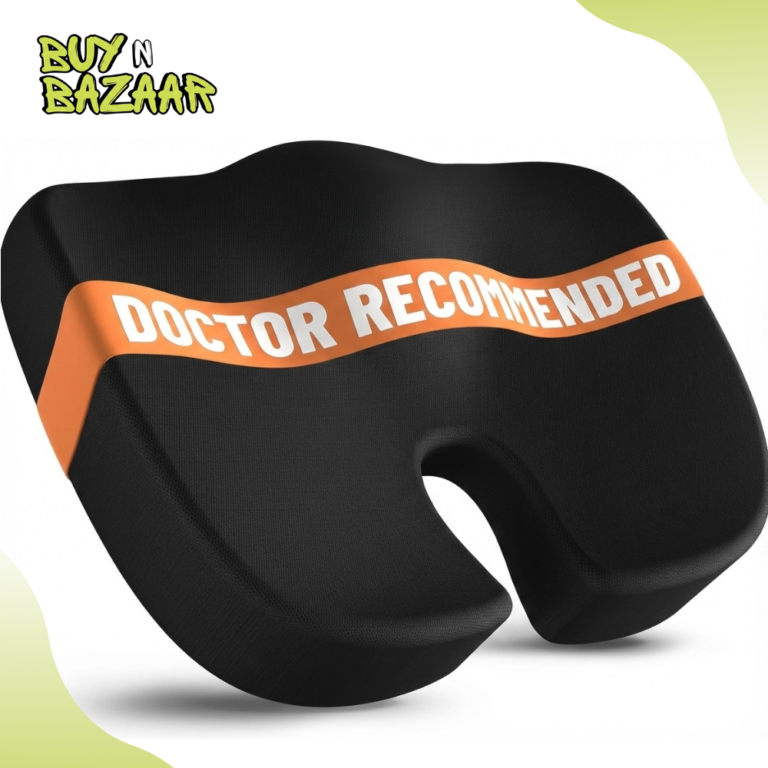
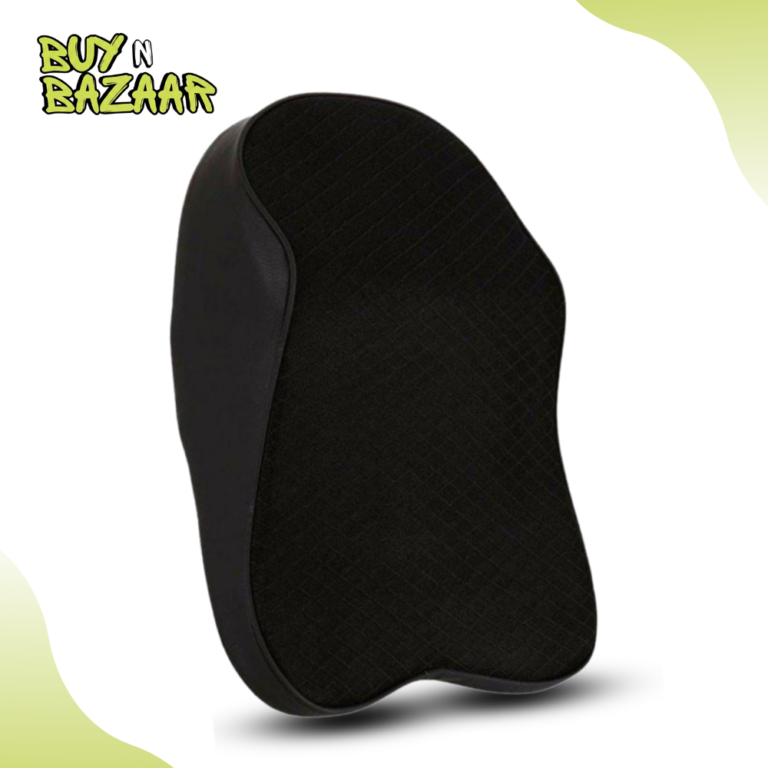
Our orthopedic range includes coccyx cushions with tailbone cutout (designed for coccydynia, post-surgical recovery, and hemorrhoid relief), lumbar support pillows with ergonomic contour (for office chairs, car seats, and wheelchairs), cervical pillows with memory foam contour and cooling gel layer (critical in Pakistan's hot summers), full-back seat cushions combining lumbar and coccyx support (for drivers doing 6+ hour routes — truck drivers, rickshaw drivers, inter-city commuters), and travel neck pillows with 360-degree head support for long bus, train, and air travel.
Orthopedic Cushion Comparison: Pakistan Market
| Product Type | Best For | Foam Density | Price Range (PKR) | Key Feature |
|---|---|---|---|---|
| Coccyx Cushion | Office workers, post-surgery | 50-55 kg/m³ | 3,500-5,500 | Tailbone cutout, pressure relief |
| Lumbar Support Pillow | Desk workers, drivers | 45-50 kg/m³ | 2,500-4,500 | Ergonomic contour, strap attachment |
| Cervical Pillow | Neck pain, sleeping | 50-60 kg/m³ | 4,000-12,500 | Contour shape, cooling gel option |
| Car Lumbar Cushion | Drivers, commuters | 45-55 kg/m³ | 2,800-4,500 | Adjustable strap, compact design |
| Full Seat Cushion | Long-haul drivers, elderly | 50-60 kg/m³ | 5,000-8,000 | Combined lumbar + coccyx support |
What Is the Difference Between Memory Foam and Regular Foam Cushions?
Memory foam (viscoelastic polyurethane) responds to body heat and weight, molding to your body's contours and distributing pressure evenly across the sitting surface. Regular polyurethane foam compresses uniformly under weight without conforming to body shape, creating pressure points that worsen back and coccyx pain. The critical difference is foam density: clinical-grade memory foam measures 45-60 kg/m³ and maintains its shape through thousands of compression cycles, while regular foam is typically 20-35 kg/m³ and flattens permanently within weeks. In Pakistan's market, many products labeled 'memory foam' are actually regular foam — check the density rating before purchasing. A simple test: press your hand into the cushion for 10 seconds and remove it. Genuine memory foam shows a handprint that slowly fills back (3-5 seconds). Regular foam springs back immediately or doesn't spring back at all.
Posture Support: Correctors, Lumbar Belts, and Ergonomic Aids
Poor posture is not a cosmetic problem — it is a progressive condition. The clinical progression begins with muscle fatigue (1-3 months of poor posture), advances to chronic myofascial pain (3-12 months), and can result in structural changes including kyphosis (upper back rounding), cervical lordosis loss (forward head posture), and herniated discs (years of uncorrected sitting).
Pakistan's work culture accelerates this progression. IT professionals in Lahore and Islamabad work 9-12 hour shifts. University students attend lectures and study on beds with no back support. Rickshaw and taxi drivers sit on unpadded seats for 10+ hour shifts. Work-from-home setups during and after COVID meant millions of Pakistanis worked from dining chairs, beds, and floor cushions with zero ergonomic support.
Our posture support range includes adjustable posture corrector belts (upper back brace design that retrains muscle memory by gently pulling shoulders back), ergonomic laptop stands (raising screen to eye level eliminates the 45-degree neck flex that causes 'tech neck'), and wrist supports for keyboard users. These are complementary products — physiotherapists recommend using a posture corrector for 30-60 minutes daily while building core strength through exercise, not as an all-day device.
How Long Should You Wear a Posture Corrector Each Day?
Physiotherapists recommend wearing a posture corrector for 15-30 minutes initially, gradually increasing to 1-2 hours per day over 2-3 weeks. Wearing a posture corrector all day is counterproductive — your back muscles need to actively maintain posture rather than relying on external support, or they will weaken further. Use the corrector as a training tool: wear it during desk work to retrain your muscle memory, then remove it and consciously maintain the same posture. Pair with strengthening exercises — planks, bird-dogs, wall angels, and chin tucks — for lasting results. If you experience increased pain, numbness, or tingling while wearing a corrector, discontinue use and consult a physiotherapist. For Pakistan's office workers: set a phone reminder every 45 minutes to stand, stretch, and walk for 2 minutes — this single habit reduces lower back pain risk by 32% according to occupational health research.
Hair Care: Anti-Hair Fall Solutions for Pakistan's Climate and Water Conditions
Hair fall in Pakistan is driven by a combination of factors that do not exist together in most other markets. Hard water in Punjab cities (TDS levels of 300-1000+ ppm in Lahore, Faisalabad, Multan) deposits calcium and magnesium on hair shafts, causing brittleness and breakage. Extreme UV exposure (8+ UV index for 7 months of the year) degrades hair protein structure. Humidity in coastal cities (Karachi: 70-85% average) creates fungal scalp conditions. Iron deficiency affects 44% of Pakistani women, causing telogen effluvium (excessive shedding). Vitamin D deficiency from indoor lifestyles and cultural covering affects hair follicle cycling.
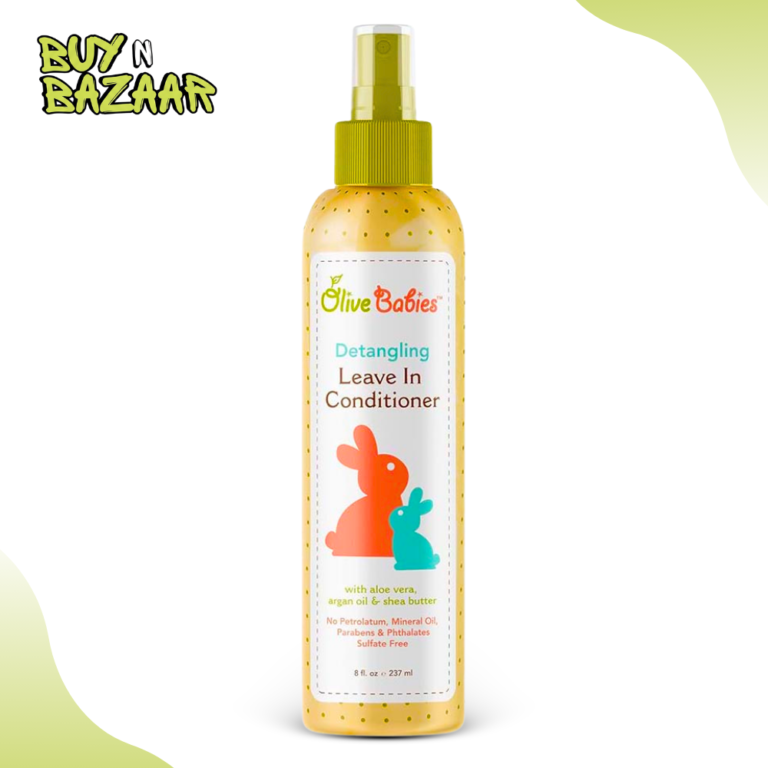
Addressing hair fall requires treating the cause, not masking the symptom. BuyNBazaar's hair care range includes biotin-enriched shampoos and supplements (biotin supports keratin production — the structural protein of hair), keratin treatment products (for repairing heat and chemical damage), argan oil serums (for UV protection and moisture retention), anti-dandruff solutions with zinc pyrithione and ketoconazole (addressing fungal causes of hair fall), and derma rollers with 0.5mm titanium needles (stimulating blood flow and collagen production in the scalp through micro-needling).
Why Is Hair Fall So Common in Pakistan and What Really Works?
Hair fall is exceptionally common in Pakistan due to five converging factors: hard water (Punjab's TDS levels of 300-1000+ ppm damage hair protein), iron deficiency (affecting 44% of Pakistani women — WHO 2024), extreme UV exposure (UV index 8+ for seven months annually), vitamin D deficiency from indoor lifestyles, and humidity-related fungal scalp conditions in coastal areas. What actually works depends on the cause. For iron/vitamin deficiency: get a blood test (CBC, ferritin, vitamin D, B12) and supplement as directed by your doctor — no topical product can fix a nutritional deficiency. For hard water damage: use a chelating shampoo once weekly to remove mineral deposits, or install a shower filter (Rs. 2,000-5,000). For environmental damage: keratin treatments repair protein structure, argan oil provides UV protection. For pattern hair loss (androgenetic alopecia): minoxidil 5% is the only FDA-approved topical treatment. Avoid hair oils with 'heating' ingredients (mustard oil, capsaicin) — these irritate the scalp without promoting growth.